
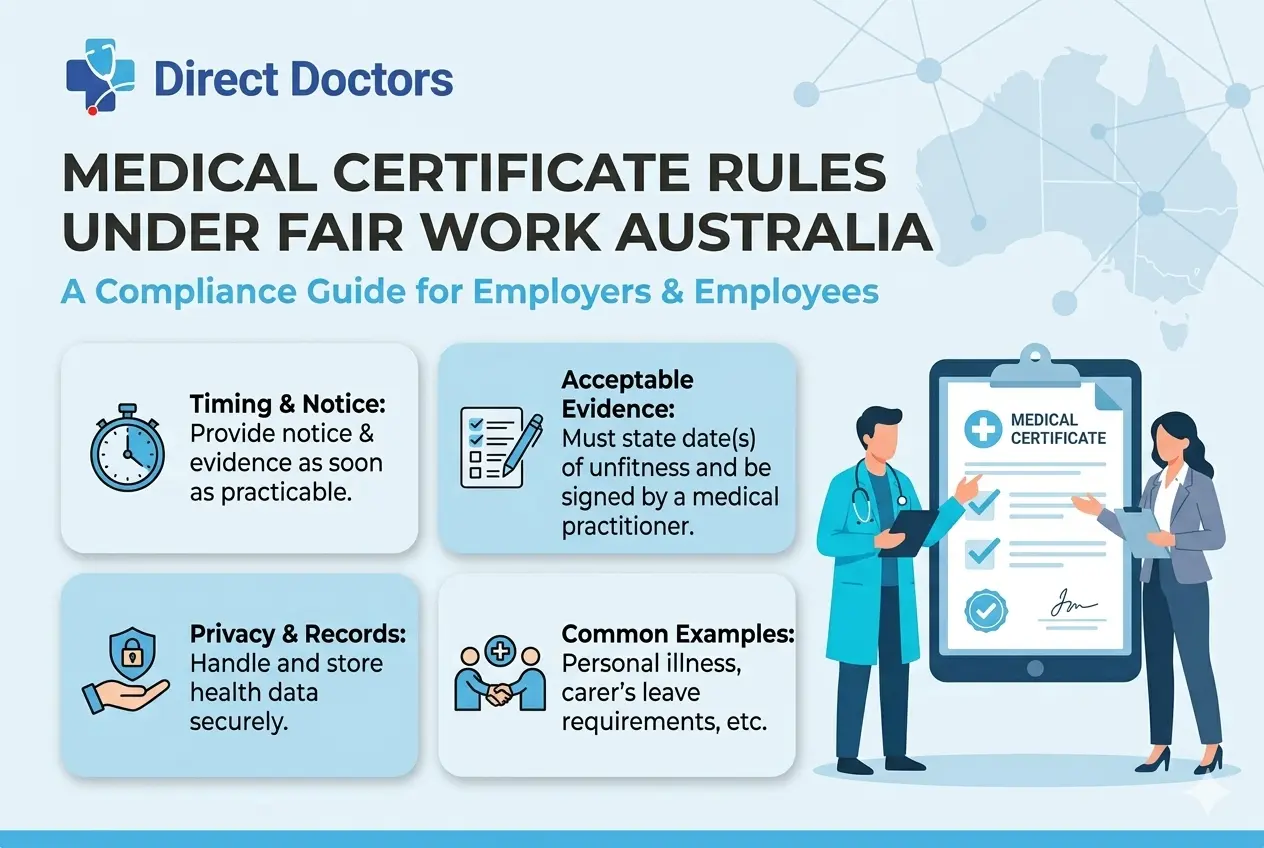
Understanding the medical certificate fair work Australia rules is important for both employees and employers. These rules explain when a medical certificate is needed, what makes it valid, and how it supports sick leave or carer's leave.
In Australia, workplace leave is protected by law, and online medical certificates play a key role in ensuring fairness and transparency.
What Is Fair Work Australia?
Fair Work Australia refers to the workplace relations system governed by the Fair Work Act 2009. The Fair Work Ombudsman is the official body that provides guidance on employee rights and employer responsibilities.
Under this law, employees are entitled to take:
What Does the Law Say About Medical Certificates?
The medical certificate fair work Australia rules state that employers can request reasonable evidence to confirm that an employee was unfit for work due to illness or injury. The most common form of evidence is a medical certificate issued by a registered health practitioner.
According to Fair Work guidelines:
These rules protect employee privacy while ensuring employers receive reliable documentation.
What Counts as Reasonable Evidence of Illness?
The concept of fair work evidence illness is clearly defined. Reasonable evidence can include:
While statutory declarations are allowed, most employers prefer medical certificates because they are issued by qualified medical professionals. This provides greater reliability and trust.
A statutory declaration from the employee is also accepted as reasonable evidence under Fair Work rules.
Read this also: Do Employers Accept Online Medical Certificates in Australia?
Who Can Issue a Valid Medical Certificate?
A valid medical certificates must be issued by a registered health practitioner. This includes:
In recent years, telehealth medical services have become widely accepted. Doctors can now assess patients online and issue legally valid certificates. These certificates carry the same legal value as those issued during in-person consultations, as long as the practitioner is registered with the Australian Health Practitioner Regulation Agency (AHPRA).
Key Sick Leave Certificate Rules
The sick leave certificate rules under Fair Work are straightforward and designed to be fair for both employees and employers.
Employers Can Request Evidence
Employers can ask for a medical certificate even for a single day of sick leave, depending on company policy.
Employees Must Provide Evidence When Requested
If an employer asks for proof, the employee must provide it within a reasonable time frame.
Certificates Must Be Genuine
The certificate must be issued after a proper medical assessment. Providing false or altered documents can lead to disciplinary action.
Privacy Must Be Respected
Employers cannot demand details about the illness. The certificate only needs to confirm that the employee was unfit for work.
Information Required on a Valid Medical Certificate
To meet medical certificate fair work Australia standards, a valid certificate should include:
When Employers May Question a Certificate
Employers must generally accept medical certificates. However, they may question a certificate if:
Even in these cases, employers must have a reasonable basis for their concerns. They cannot reject a certificate simply because it was issued online.
Telehealth and Modern Workplace Compliance
Telehealth has become a trusted and widely used healthcare option in Australia. Millions of Australians now use online consultations for medical advice, prescriptions, and certificates.
Telehealth-issued certificates meet all sick leave certificate rules when:
This modern approach improves access to healthcare, especially for people in remote areas or those who are too unwell to visit a clinic.
Benefits of Following Fair Work Medical Certificate Rules
Common Workplace Scenarios
Medical certificates are commonly required in situations such as:
In all these cases, providing valid fair work evidence illness helps maintain trust and transparency.
Read this also: What Is a Carer’s Certificate and When Do You Need One?
Best Practices for Employees
To ensure compliance with Fair Work rules, employees should:
These simple steps help avoid misunderstandings and ensure smooth leave approval.
The Future of Medical Certificates in Australia
Digital healthcare is shaping the future of workplace compliance. Online medical certificates are now widely accepted and trusted. As workplaces continue to modernise, telehealth services will play an even greater role in supporting employee wellbeing and legal compliance.
Conclusion
The medical certificate fair work Australia rules provide clear guidance on how sick leave and carer's leave should be supported with valid evidence. Under these laws, a medical certificate from a registered practitioner is considered reliable and acceptable proof of illness.
The sick leave certificate rules ensure fairness, protect employee privacy, and support workplace transparency. With the rise of telehealth, obtaining valid documentation has become faster and more convenient.